EA Is a Decision System — Not a Documentation Function
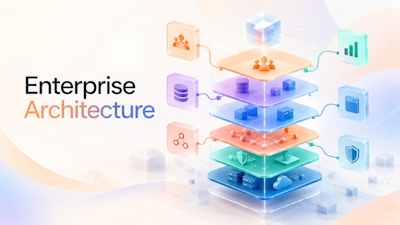
"Enterprise Architecture delivers value by improving strategic
Leaders are not measured by the number of documents they produce. They are measured by the quality of the decisions they make and the outcomes those decisions enable.
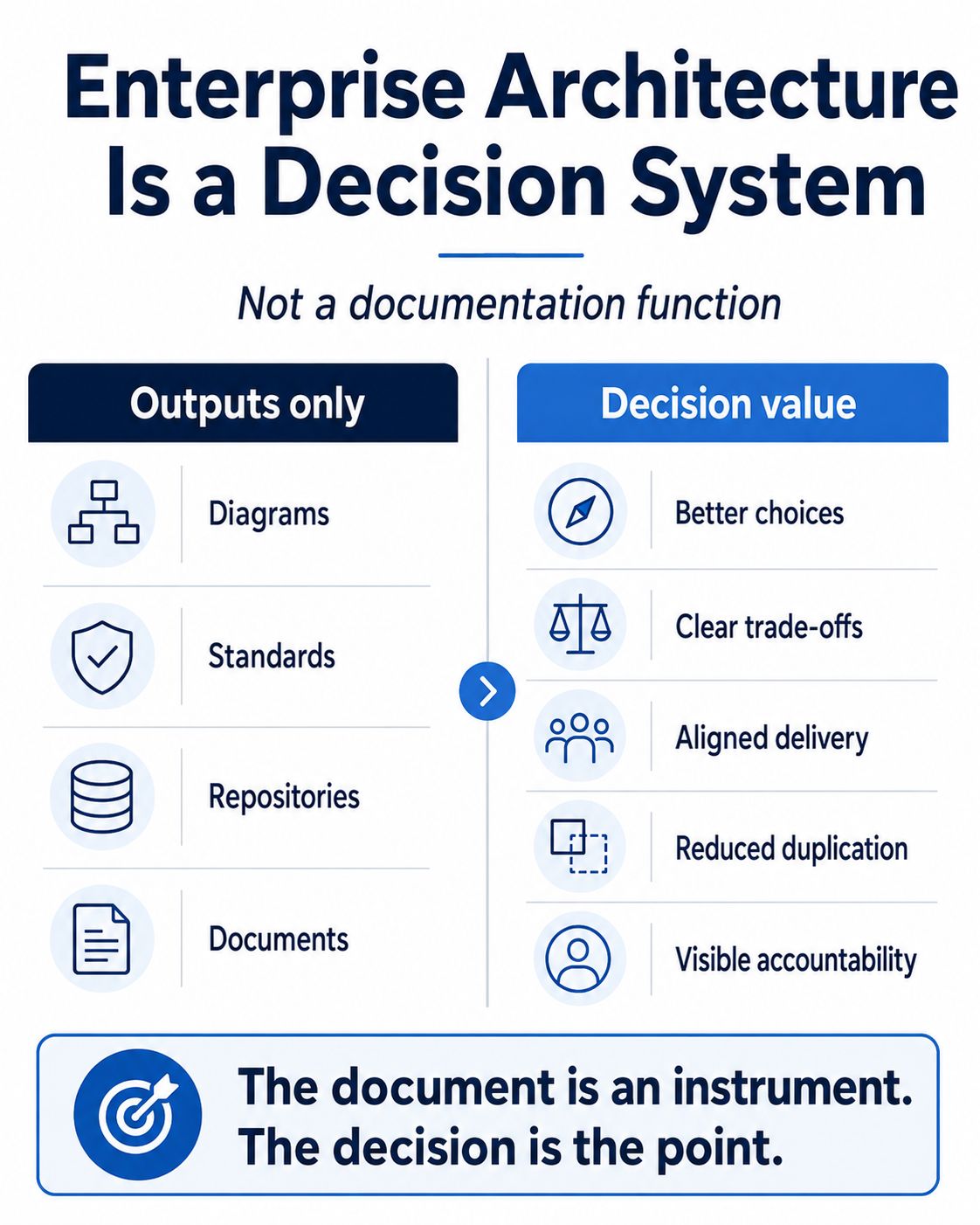
Yet in many organisations, Enterprise Architecture is still judged primarily by its visible outputs:
- Diagrams.
- Standards.
- Roadmaps.
- Repositories.
- Review papers.
These artefacts can all be valuable. But they are not the value itself. The real value of Enterprise Architecture is its ability to help an organisation make important technology and transformation decisions with greater clarity, consistency and accountability.
In practice, that means helping leaders:
- Connect business strategy with delivery
- Clarify options and trade-offs
- Expose risks, dependencies, duplication and complexity
- Establish principles and guardrails
- Define current, transition and target states
- Clarify decision ownership
- Reduce repeated debate and inconsistent choices
- Guide portfolios, programs, projects and platforms towards a coherent direction
Consider a simple composite example.
Three transformation programs need access to the same customer information. Each program has capable people and legitimate delivery pressures. But without a shared architecture decision context, each may choose a different data model, integration pattern or identity approach.
Every local decision may appear reasonable. Together, they create duplication, inconsistent controls and more complexity for the organisation to manage later.
Decision-centred architecture enables better delivery decisions
Decision-centred Enterprise Architecture does not take every design decision away from delivery teams. Instead, it establishes the conditions in which teams can make better decisions with confidence and consistency.
That means providing:
- Shared principles and guardrails that guide decisions without unnecessary constraints.
- Visible dependencies across business capabilities, information, applications and technology.
- Clear accountability for important architectural decisions.
- Agreed patterns and standards that encourage reuse and reduce duplication.
- Transparent trade-offs between business value, cost, complexity, risk and delivery feasibility.
- A practical approach to exceptions when legitimate circumstances require a different decision.
Architecture artefacts still play a vital role.
A capability map can reveal where investment is needed. A current-state architecture can expose duplication and risk. A target state can align strategic direction. A transformation roadmap can guide investment, sequencing and delivery.
A decision record can preserve not only what was agreed, but why.
The difference is purpose.
These artefacts should support decisions, not become the primary measure of architectural success.
The document is an instrument. The decision is the point.
Enterprise Architecture creates its greatest value when it connects strategy, technology decisions and delivery outcomes.
Perhaps the better measure of Enterprise Architecture is not how much it has documented, but how much clarity it has created around the decisions that matter.
The future of Enterprise Architecture should be measured less by the documents it produces and more by the decisions it enables.