Stop Waiting for the Perfect Data Platform
Use a valuable workflow to define the data foundation you need,
The business wants a better service. The proposed first step is an enterprise data programme that may take years.
There can be sound reasons for substantial platform investment. The difficulty comes when every useful improvement is made dependent on completing the whole foundation.
I would start by finding out which part of the foundation the first business outcome actually needs.
Work backwards from one valuable workflow
Take an internal approval process. Perhaps the useful outcome is to reduce avoidable delays while preserving the right approvals and evidence.
The first release may need only the request, the relevant policy, the delegation record and a way to record the result. That is a manageable data scope. It still requires proper ownership, access controls, reliable definitions and operating support.
A narrow scope makes those obligations easier to examine. Who owns the delegation record? How quickly must a policy change take effect? What happens if a source is unavailable? Which information must be retained with the decision?
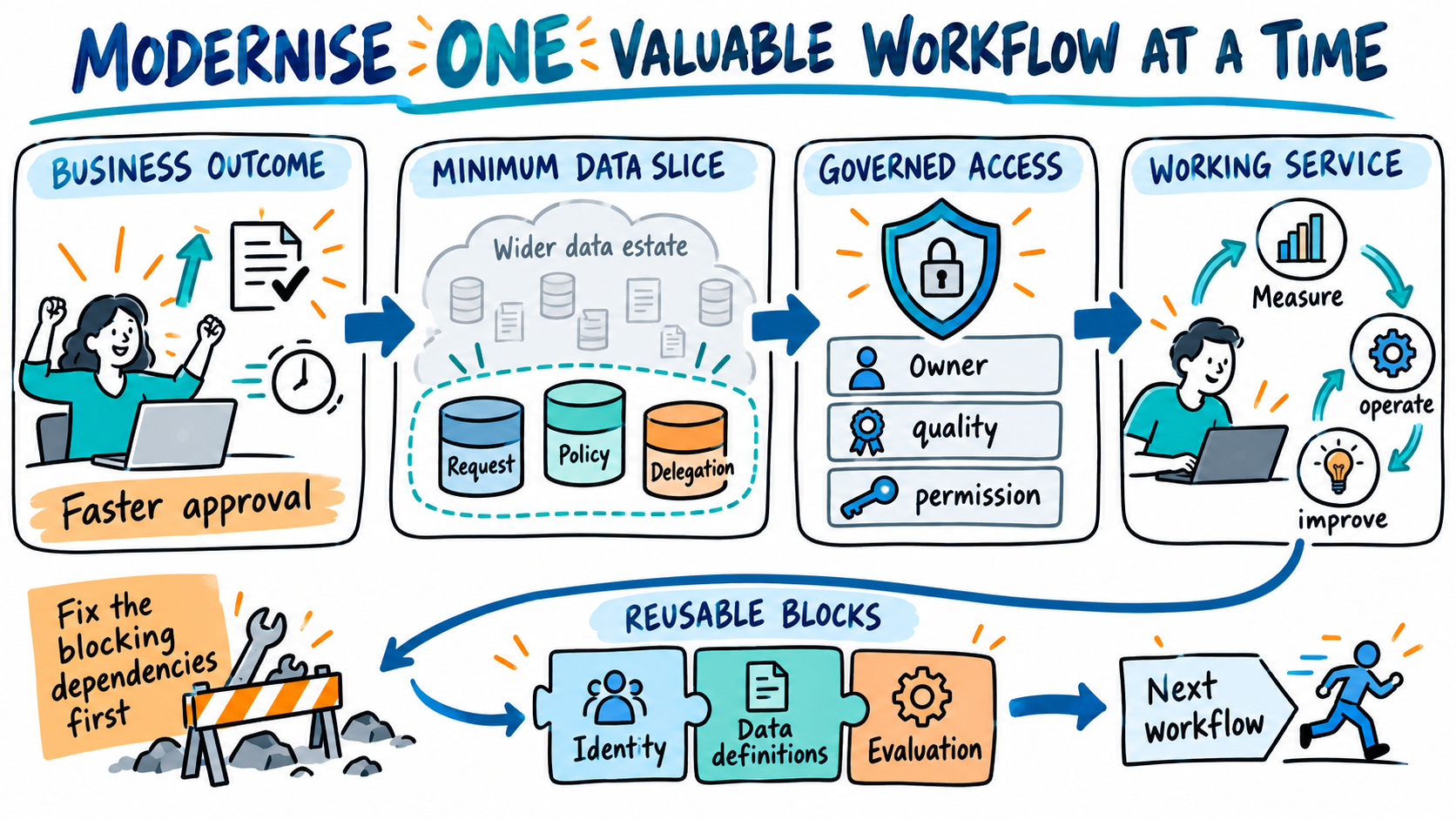
Use the workflow to select the necessary data and controls, then carry reusable capabilities into the next release.
This approach does not mean working around a known security problem or quietly accepting unreliable data. If a shared dependency cannot support safe use, fixing it becomes an explicit prerequisite. The difference is that the prerequisite has a clear connection to a business outcome.
Make data-placement choices deliberately
“Single source of truth” can hide several different architectural choices.
Sometimes the right answer is to access data in its authoritative system. Sometimes a curated data product gives consumers the stable definition and quality they need. Sometimes consolidating information creates a durable foundation for history, performance or shared controls.
Those choices have different obligations.
Connected access depends on the source's availability, permissions and interfaces. A curated product needs an owner, a refresh process and a clear meaning. Consolidation brings migration, reconciliation, retention and ongoing platform responsibilities.
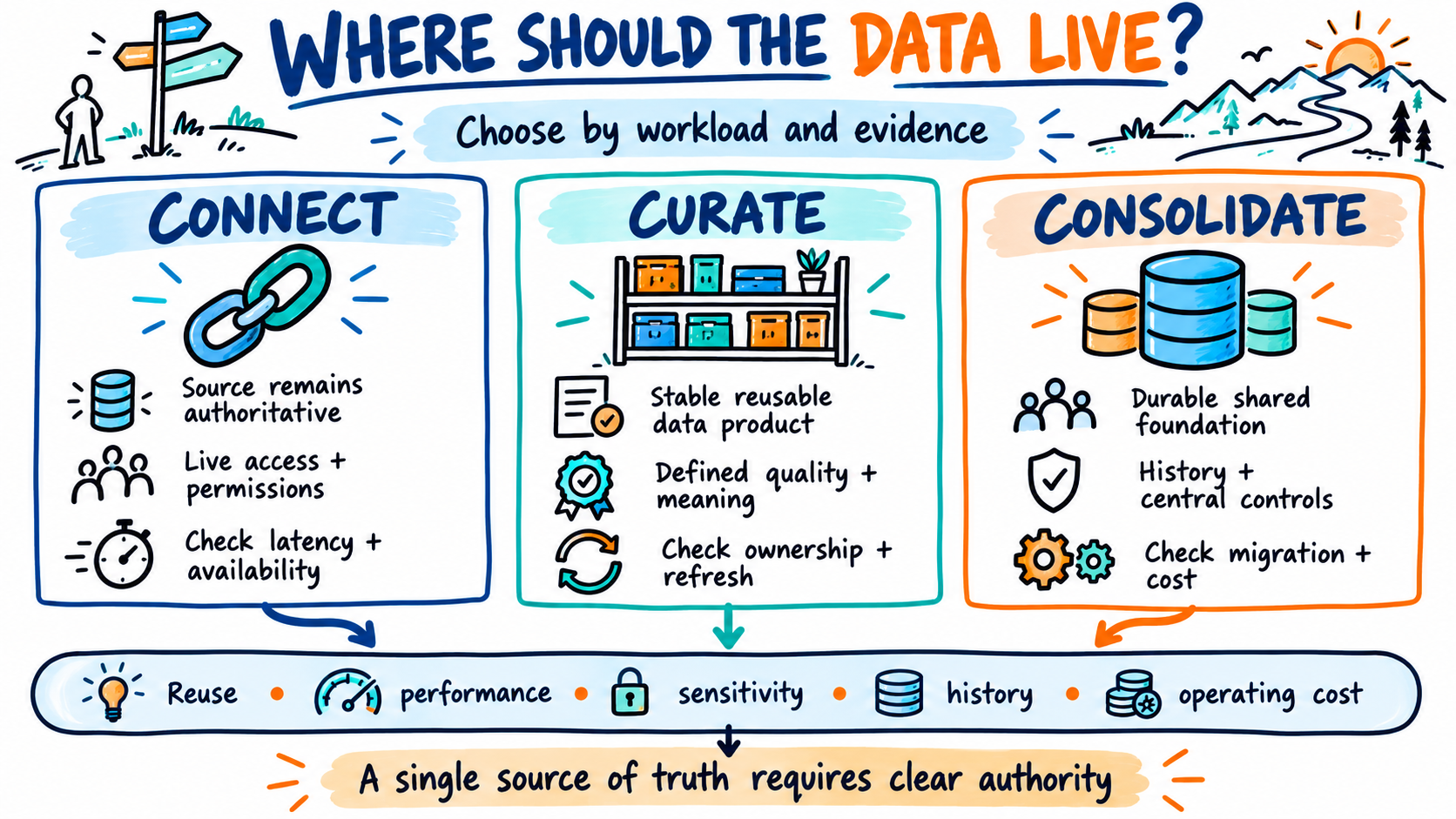
Choose connection, curation or consolidation according to workload needs and operational evidence.
The organisation should be able to explain why it is copying information, why the destination is suitable and which source has authority when values disagree. Physical location alone does not settle any of those questions.
Build reuse into the first slice
A small first release can still make a useful enterprise contribution.
Establish an identity pattern that another workflow can use. Define the policy's ownership and effective dates. Create an evaluation set that tests access, freshness and conflicting information. Record the operational procedure for an unavailable source.
Those are concrete assets. Their value becomes clearer when the next workflow can use them without repeating the entire design discussion.
The collected Microsoft data-estate sessions pointed towards use-case-led sequencing. My interpretation is to build the minimum credible foundation for a meaningful service, measure it and expand from what proves reusable.
Keep the wider direction visible
There is a risk in working one slice at a time: local solutions can accumulate into another fragmented estate.
Maintain a target direction and review each release against it. Identify temporary integrations, duplicated definitions and components that will need replacement. Give those compromises an owner and a review point. Otherwise “temporary” can become a permanent operating cost.
The next funding proposal should show both views: the business outcome delivered by the first slice and the enterprise capabilities it leaves behind. That makes a platform investment easier to assess, and gives the business a reason to stay involved while the foundation improves.