A Faster Process Can Still Be a Bad Experience
The assistant responds immediately. It is polite, available and
The customer is on their third contact, explaining the same situation again.
Both descriptions can be true. An organisation can improve one step while leaving the journey frustrating and the underlying need unresolved.
That is why I would be careful about calling an AI service successful on response speed or the number of conversations kept away from a human team.
Start with the outcome the person needs
A customer contacting an organisation is usually trying to achieve something: correct a bill, confirm eligibility, arrange a service or resolve a problem.
Their definition of success may have little to do with the channel. They want a reliable answer, a completed action and confidence about what happens next.
Draw the journey from that perspective. Include the first contact, the information requested, internal case progress, any handoff and the eventual outcome. Mark where the person waits, repeats information or has to chase the organisation.
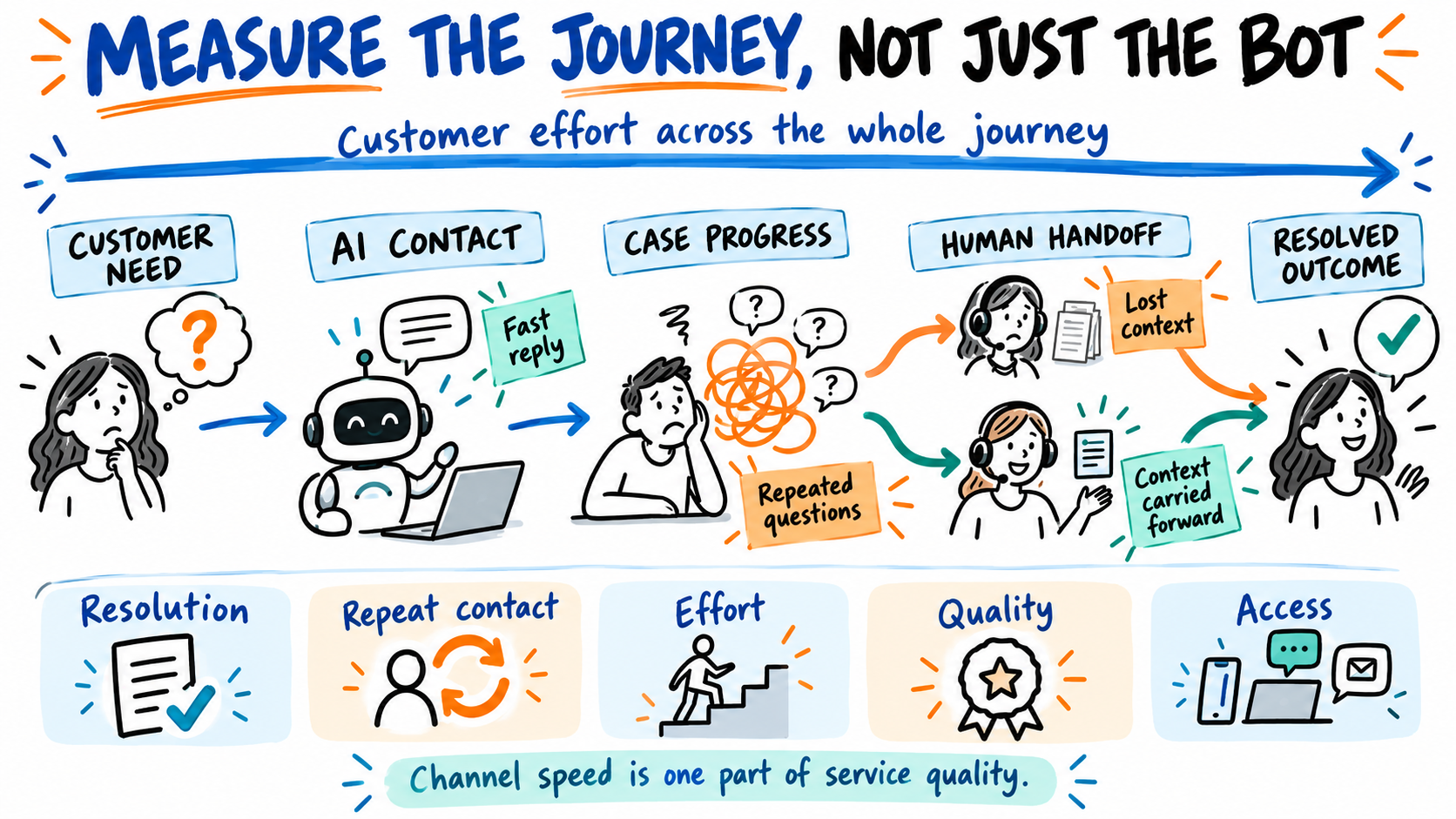
Examine customer effort and resolution across the whole service, including what happens after the AI conversation.
An assistant can make the opening exchange easier while pushing the difficult work elsewhere. It might create more incomplete cases or give customers a reassuring answer that the back-office process cannot honour.
The service owner needs to see those effects together. Review resolution, repeat contact, effort, quality and access alongside channel performance. A customer choosing a person should also have a workable route to one.
Design escalation as part of the service
The handoff deserves a design before the first difficult case arrives.
Agree on the triggers: a potentially serious consequence, missing or conflicting evidence, a request beyond the assistant's authority or a customer who asks for help from a person. Decide who receives the case and how they accept ownership.
The receiving person needs a useful handoff pack: customer intent, verified facts, actions already attempted, unresolved uncertainty and the relevant consent and access boundaries. Only the information necessary and permitted for that role should travel with it.
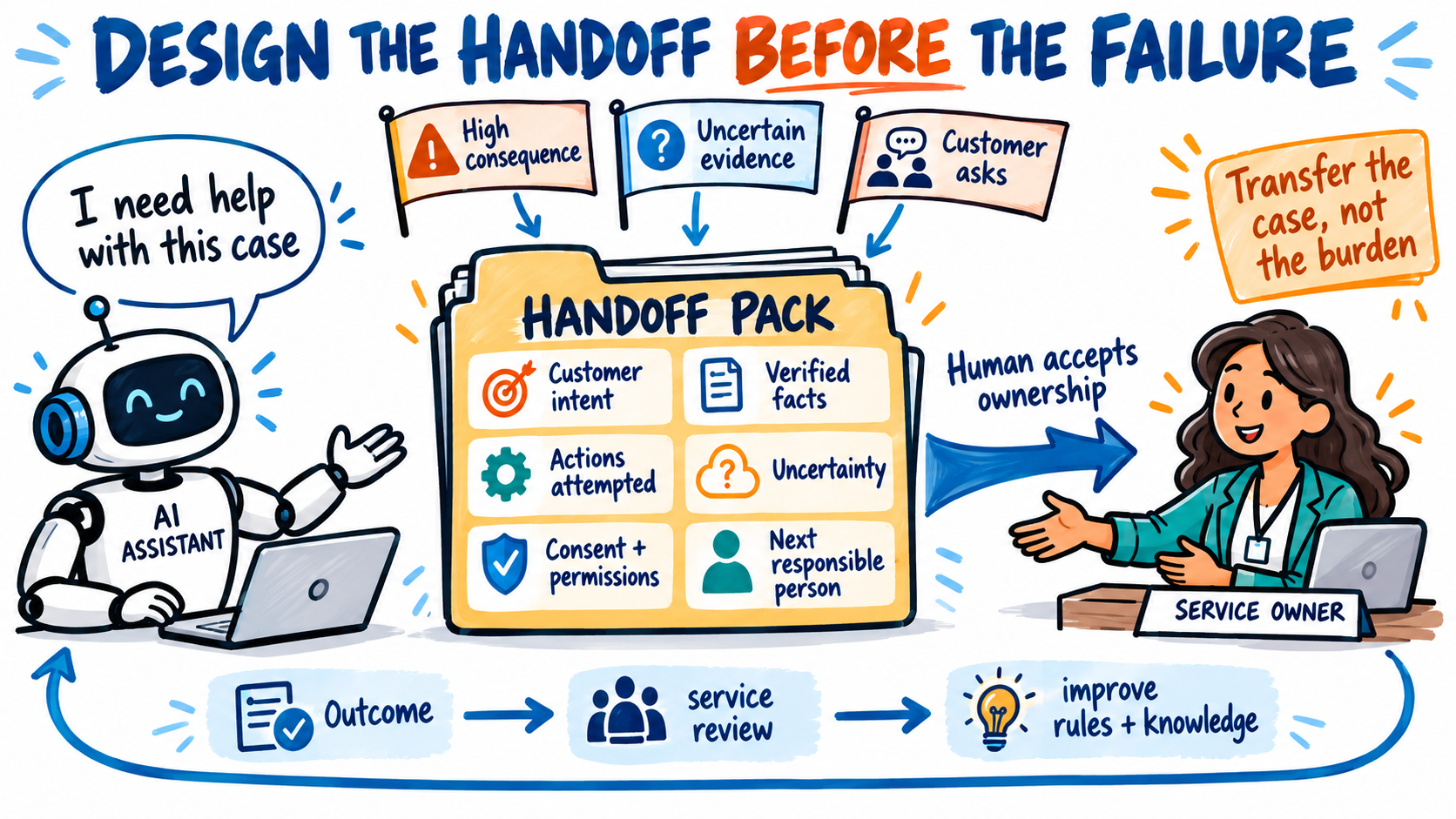
Carry context and responsibility into the human service, with clear triggers and feedback into improvement.
A transfer is incomplete if the conversation moves but nobody owns the next action. Make the acceptance visible. Tell the customer what will happen, who is responsible and when they should expect progress.
Sometimes repeating a detail is necessary for verification. Explain that purpose rather than making the customer feel the organisation has forgotten everything they already provided.
Test with the cases that expose the gaps
A straightforward request tells you whether the basic service works. An unusual circumstance can reveal whether it works for the people who need more support.
Include incomplete records, ambiguous language, accessibility needs and requests spanning more than one team. Where appropriate, involve customers and frontline staff in evaluating the experience. Their feedback can expose friction that a successful technical test misses.
Also ask whether a recurring exception points to a process problem. Improving the knowledge source or changing a confusing form may remove the need for the conversation altogether.
Before expanding the next AI channel, follow a small sample of real cases from first contact to resolution, using appropriate privacy controls. The gaps between the conversation and the completed service are where the next transformation decision should begin.